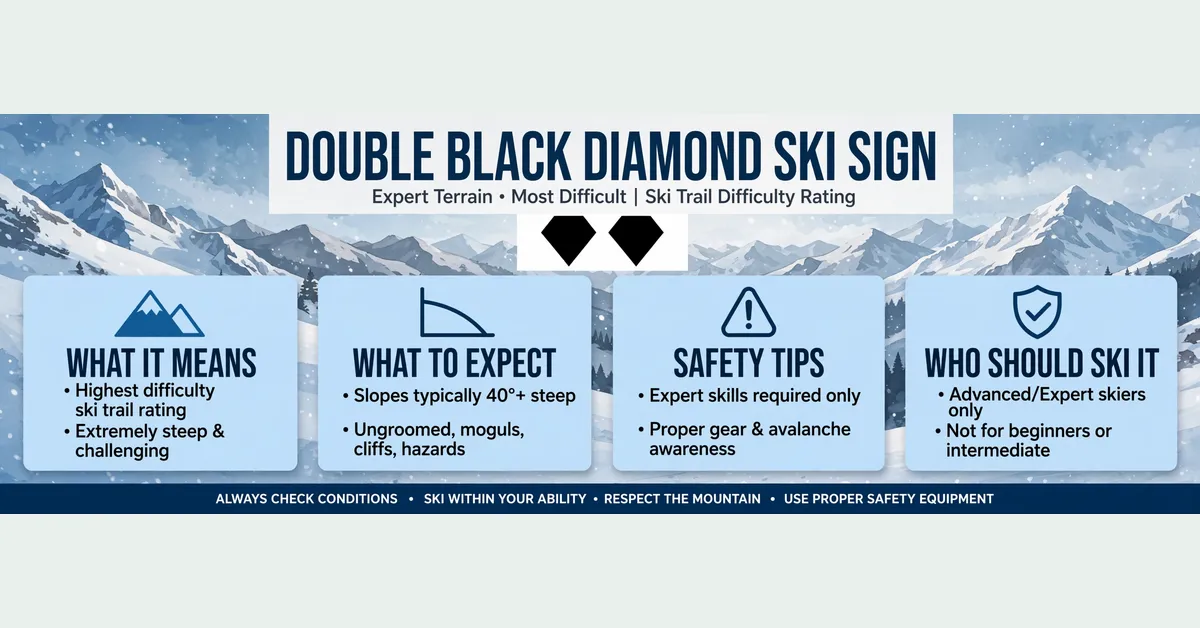
Double Black Diamond Ski Sign: Meaning, Colors & Custom Options
A double black diamond ski sign marks expert-level terrain in the common US ski trail-rating system. It warns skiers and snowboarders that a run may involve steep slopes, narrow chutes, exposed obstacles, or other challenging conditions. For ski resorts, mountain operators, and private slope owners, these trail rating symbols also communicate important information that visitors need to navigate the mountain.
Understanding double black diamond meaning helps recreational skiers choose appropriate terrain and helps resort operators plan clear, consistent ski resort signage. Whether you are checking a trail map before your next run or researching custom ski trail signs for a mountain facility, this guide explains the symbols, compares difficulty ratings, and outlines practical considerations for selecting ski trail marker signs.
What Does a Double Black Diamond Ski Sign Mean?
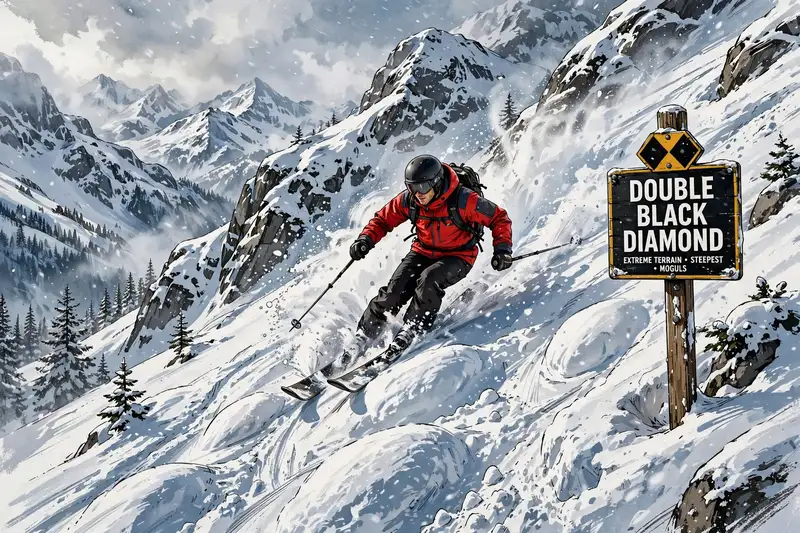
A double black diamond ski sign identifies expert-level terrain that requires advanced skiing or snowboarding skills and extra caution. In the United States, it represents one of the most challenging categories in the commonly used trail difficulty system. Depending on the mountain, a marked run may include steep pitches, moguls, narrow passages, trees, exposed rocks, or significant changes in elevation.
The symbol communicates relative difficulty rather than a universal measurement of danger. A double black diamond trail at one resort may differ substantially from one at another because terrain, snow conditions, exposure, and local rating practices vary. Skiers should consult the resort’s official trail map and posted warnings before entering unfamiliar terrain. The National Ski Areas Association provides useful background on ski area trail signage.
Double Black Diamond vs Black Diamond: What’s the Difference?
A single black diamond generally identifies difficult terrain intended for advanced skiers, while a double black diamond indicates especially challenging expert terrain. Both ratings require sound technique and judgment, but the double marker signals that the run may present additional technical challenges or leave less room for mistakes.
| Trail rating symbol | General difficulty | Typical audience |
| Green circle | Easier | Beginners |
| Blue square | More difficult | Intermediate skiers |
| Single black diamond | Most difficult | Advanced skiers |
| Double black diamond | Expert terrain; use extra caution | Expert skiers |
| Orange oval | Designated freestyle terrain | Skiers and riders using terrain parks |
These categories describe common US conventions, not identical standards at every resort. A trail’s actual difficulty depends on its physical features and current conditions. The rating should guide decisions, but it should never replace a careful assessment of ability, visibility, snow, and the route ahead.
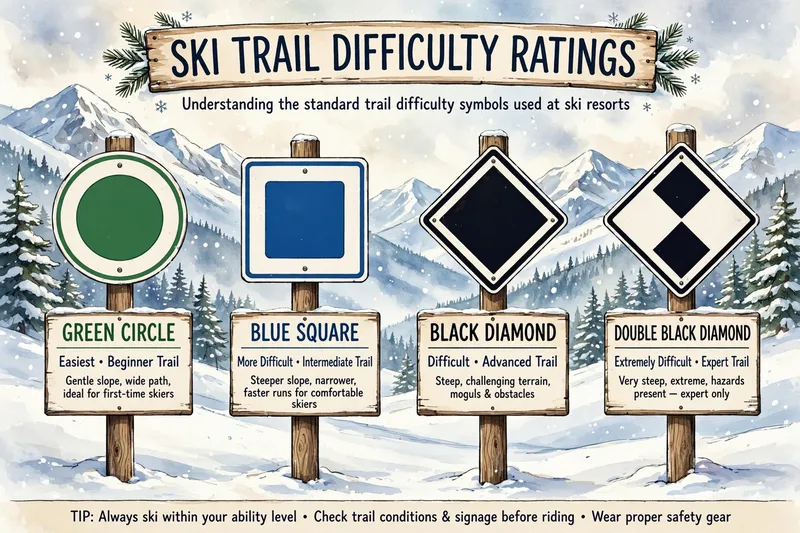
Ski Trail Rating Symbols Explained: Green, Blue, Black and Double Black
Ski trail signs use recognizable shapes and colors to help visitors understand the relative difficulty of designated runs. Green circles commonly indicate easier trails, blue squares represent more difficult terrain, and black diamonds mark difficult runs. Double black diamonds indicate particularly challenging expert terrain in the common North American system.
Orange ovals are generally associated with designated freestyle terrain, such as terrain parks. The specific features and rules of a park depend on the resort. When interpreting ski slope signs, visitors should also distinguish difficulty symbols from directional arrows, trail names, boundary markers, closures, and warning signs. Each communicates a different kind of information, so reading the complete trail map is more reliable than interpreting one symbol in isolation.
Do Ski Trail Signs Look the Same Everywhere?
No. Ski trail difficulty ratings vary internationally, and even resorts using similar symbols may classify their terrain differently. North American resorts commonly use green circles, blue squares, black diamonds, and double black diamonds. Many European ski areas instead use colored piste ratings, commonly blue for easier runs, red for intermediate runs, and black for difficult runs. Green runs also exist in some European systems.
This difference matters when planning an international ski trip. A skier accustomed to a US blue square should not automatically assume that a blue piste in another country has precisely the same characteristics. Japanese resorts and other destinations may follow their own local conventions. Check the destination’s official piste map, difficulty legend, and safety information before choosing a route.
Custom Ski Trail Signs for Resorts and Private Slopes
Ski resorts, private ski facilities, terrain parks, and mountain operators may need ski trail signs that communicate difficulty ratings, directions, warnings, closures, and local rules. A double black diamond ski sign can be part of a broader signage system that helps visitors identify expert terrain and make informed route choices.
When evaluating custom ski trail signs, start with the location, intended viewing distance, exposure to weather, mounting requirements, and the information visitors must understand quickly. Signs near trail junctions may need different dimensions and layouts from signs positioned at trail entrances. Consistent typography, recognizable symbols, readable contrast, and durable construction can help keep information legible in changing mountain conditions.
Choosing Materials and Specifications for Ski Resort Signage
The right material depends on where a sign will be installed and how it will be used. Outdoor ski resort signage must contend with cold temperatures, moisture, ultraviolet exposure, snow, wind, and repeated handling or maintenance. A material suitable for a sheltered indoor display may not be suitable for an exposed trail entrance.
| Specification | What to evaluate | Why it matters |
| Material | Aluminum, suitable plastics, or other application-specific materials | Durability, weight, weather exposure, and maintenance |
| Dimensions | Viewing distance and available mounting space | Readability and placement |
| Reflectivity | Whether nighttime or low-light visibility is needed | Visibility under the intended lighting conditions |
| Graphics | Symbol accuracy, contrast, typography, and layout | Fast, clear interpretation |
| Mounting | Posts, brackets, rails, or existing sign structures | Stability and installation requirements |
| Finish | Weather resistance and cleanability | Long-term appearance and upkeep |
These are purchasing considerations rather than a claim that one specification fits every mountain. Reflective finishes are not automatically necessary for every ski trail sign, and no single material is best for every environment. Choose specifications according to the installation conditions, maintenance plan, budget, and any applicable requirements.
Ski Trail Signage, Safety and Placement
Clear signage helps visitors make informed decisions at trail entrances, junctions, lift areas, and other important points around a ski area. Difficulty markers work best when they are visible before a skier commits to a route and are consistent with the resort’s trail map. Warning signs, slow-zone markers, directional signs, and closure notices serve different purposes and should not be treated as interchangeable.
For operators, signage planning should consider viewing distance, snow accumulation, likely sightlines, lighting, mounting stability, maintenance access, and the possibility of signs being obscured by weather. Ask qualified local professionals to review placement and applicable requirements. The National Ski Areas Association’s trail-signage guidance is a useful starting point, but a manufacturer or website article should not be treated as a substitute for a resort-specific safety assessment.
Frequently Asked Questions
Is a double black diamond harder than a black diamond?
Yes. In the common US trail-rating system, a double black diamond identifies particularly challenging expert terrain compared with a single black diamond. The actual difficulty varies by resort and current conditions.
Are ski trail difficulty ratings the same everywhere?
No. Ratings can differ between resorts and countries. North American systems commonly use green circles, blue squares, and black diamonds, while many European areas use blue, red, and black piste ratings. Always check the local trail map.
What size should a double black diamond ski sign be?
There is no single size appropriate for every installation. The required dimensions depend on viewing distance, placement, available space, symbol legibility, environmental conditions, and any applicable resort or local specifications. Confirm the requirements before manufacturing.
Can I order a custom double black diamond ski sign?
Custom signs may be available from specialist sign manufacturers. Availability depends on the supplier. Ask about dimensions, materials, mounting options, artwork, quantities, lead times, and delivery to your location before placing an order.
What materials are used for ski trail signs?
Depending on the application, manufacturers may offer aluminum, suitable plastics, or other outdoor-rated materials. The best option depends on weather exposure, mounting requirements, durability, maintenance, and budget.
What is the difference between a ski trail sign and a terrain park sign?
A ski trail sign communicates trail difficulty, directions, warnings, or restrictions. A terrain park sign identifies freestyle terrain and may communicate park rules or feature-related warnings. Both should be easy to recognize and appropriate for their installation.
Make Your Ski Trail Signage Clear and Fit for Purpose
A double black diamond ski sign communicates expert-level trail difficulty, but effective mountain signage involves more than selecting the right symbol. Resorts and private slope operators should consider visibility, placement, material durability, legibility, and consistency across the entire trail network.

Jack Harrison is a contributor at Square Root Signs, sharing creative ideas, useful information, and engaging content to help readers discover something valuable with every visit.