
Right Lane Ends Ahead Sign: Meaning & How to Merge Safely
The right lane ends ahead sign warns that the lane you are driving in will end. If you are in the right lane, signal, check your blind spot, and merge into the continuing lane when a safe gap is available. Drivers in the continuing lane should maintain a steady speed and watch for merging traffic.
This yellow diamond warning sign is part of the US road-sign system covered by the Federal Highway Administration (FHWA) and the Manual on Uniform Traffic Control Devices (MUTCD). Understanding its meaning helps new drivers prepare for permit tests and helps experienced motorists respond safely to lane reductions on highways and local roads.
What Does the Right Lane Ends Ahead Sign Mean?
The right lane ends ahead sign tells drivers that the right-hand lane will disappear farther ahead. Traffic in that lane must move into a lane that continues. The warning gives motorists time to identify the lane reduction, check surrounding traffic, and plan a safe lane change.
You may encounter this sign on multilane highways, urban roads, and approaches to roadway transitions. It can appear before a permanent lane reduction or alongside other signs in a temporary traffic-control setup. Always follow the actual lane markings and additional instructions displayed on the road.
What Does the Right Lane Ends Ahead Sign Look Like?
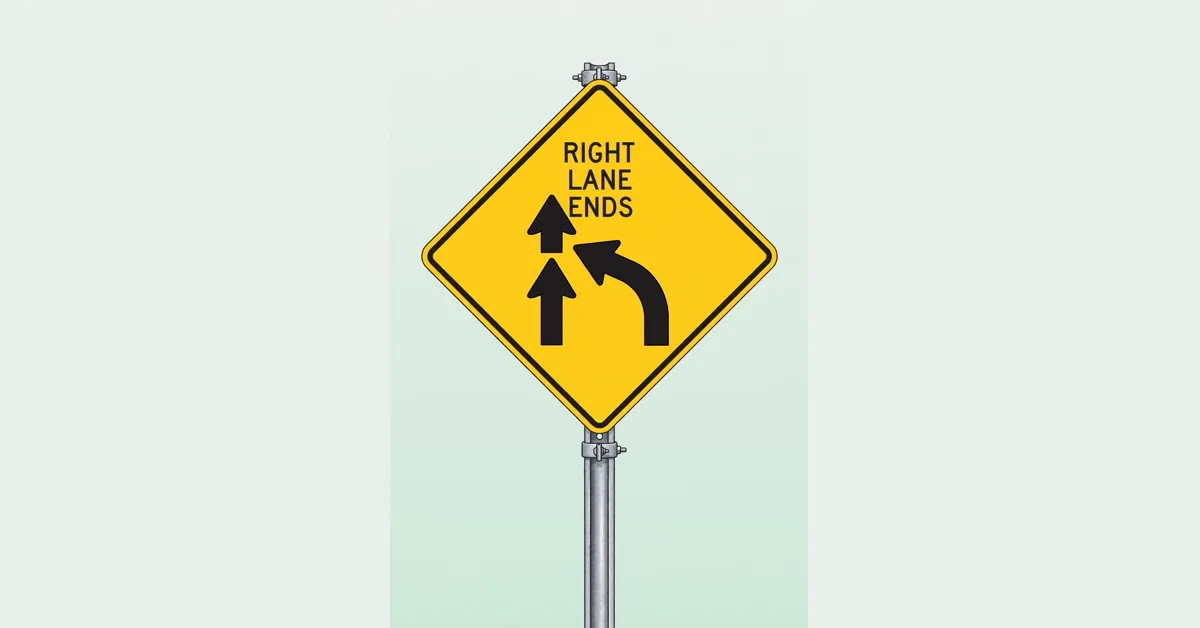
The sign uses a yellow diamond-shaped warning-sign design with black lettering or a black lane diagram. The text-based RIGHT LANE ENDS sign is designated W9-1R in the MUTCD, while the symbolic Right Lane Ends sign is designated W4-2R. These designations distinguish the wording sign from the graphic sign.
For official sign designs and placement guidance, consult the FHWA Manual on Uniform Traffic Control Devices.
What to Do When You See the Right Lane Ends Sign
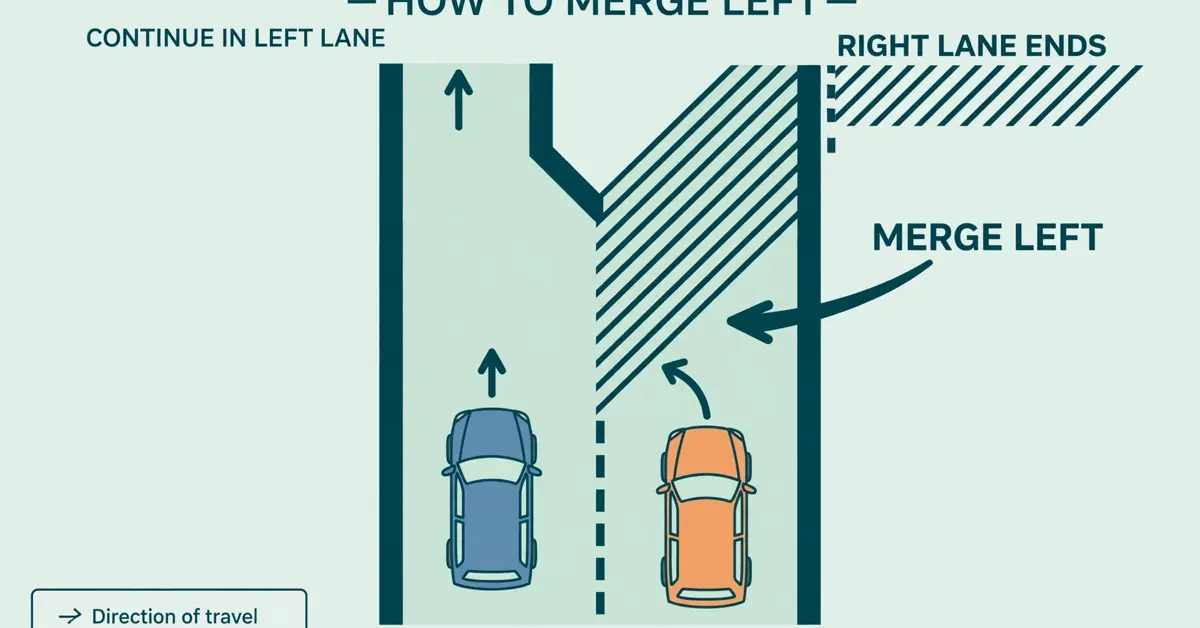
Follow these five steps when you see the right lane ends ahead sign.
Signal early. Activate your turn signal to communicate your intention to merge left.
Check your mirrors and blind spot. Confirm that the adjacent lane has enough space for your vehicle.
Take the first safe gap. Merge when there is enough room to change lanes without forcing another driver to brake or swerve.
Maintain a safe speed. Avoid sudden braking, sharp steering, or accelerating aggressively to get ahead of other vehicles.
Stay predictable. If you are already in the continuing lane, maintain a steady course and watch for vehicles entering from the ending lane.
Do not wait until the pavement disappears to begin planning your move. At the same time, do not make a sudden lane change simply because you have seen the sign. Safety, available space, road markings, and traffic conditions determine when you can merge.
Right Lane Ends Sign vs. Merge Sign vs. Road Narrows Sign
These warning signs describe different roadway conditions. Recognizing the difference helps drivers choose the correct response.
| Sign | Meaning | Driver response |
|---|---|---|
| Right Lane Ends | The right lane disappears ahead. | Prepare to move into the continuing lane. |
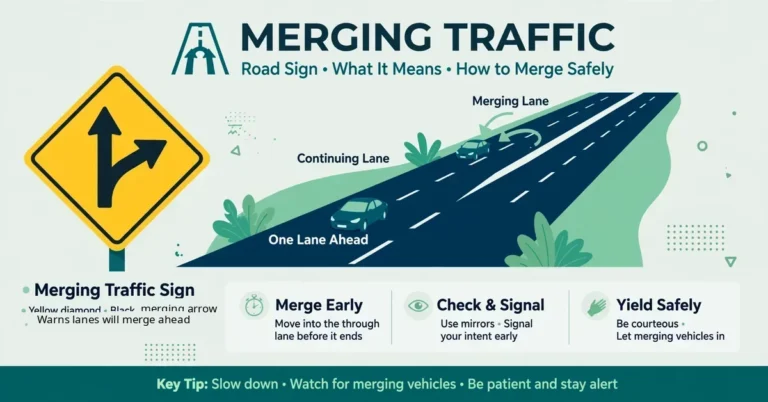
| Merge | Two traffic streams join. | Watch for joining traffic and adjust safely. |
| Road Narrows | The roadway becomes narrower. | Reduce risk by adjusting speed and road position as needed. |
| Right Lane Closed Ahead | The right lane will be closed, commonly in a work zone. | Follow temporary traffic controls and merge safely. |
A Lane Ends sign indicates a reduction in the number of lanes available in the direction of travel. A Merge sign warns that traffic streams are joining. A Road Narrows sign warns about reduced roadway width and does not necessarily mean that a lane ends.
Permanent lane reductions typically use yellow warning signs. Temporary work zones may use orange warning signs and additional traffic-control devices. Follow the signs and markings actually present rather than assuming every lane reduction has the same layout.
Where You’ll Find This Sign
Drivers may encounter a right lane ends ahead sign on multilane highways, conventional roads, and approaches to lane reductions. The sign is placed in advance of the transition so motorists can recognize the change in roadway configuration and prepare to merge.
In construction zones, a lane may close temporarily because of roadwork, maintenance, or an incident. Orange work-zone signs, cones, barriers, and temporary pavement markings may guide traffic through the closure. Follow posted speed limits and instructions from authorized traffic-control personnel.
What Must the Driver in the Ending Lane Do?
The driver in the ending lane must transition into a lane that continues when it is safe to do so. Check traffic, signal, and move into an available gap without cutting off another vehicle. If traffic is congested, remain patient and follow applicable traffic controls.
Drivers in the continuing lane should remain alert and drive predictably. The Lane Ends warning sign does not automatically establish every driver’s legal right-of-way obligations. State law, pavement markings, and other posted instructions still apply.
What Is a Zipper Merge, and When Should You Use It?
A zipper merge is a traffic-management technique in which drivers in two lanes alternate as they enter a single lane near a merge point. In heavy, slow-moving traffic, this approach can help use available road space and reduce long queues in some conditions.
However, the correct procedure depends on the roadway layout, traffic controls, and applicable state guidance. Some transportation agencies encourage drivers to use both lanes until the designated merge point in congested work zones; others may provide different instructions for particular locations. Follow the posted signs and local guidance. Never use the zipper-merge concept as an excuse to speed past traffic or force your way into a gap.
Common Mistakes to Avoid
- Waiting until the last second: Plan your lane change as soon as conditions allow.
- Skipping the blind-spot check: Mirrors alone may not reveal every nearby vehicle.
- Changing lanes without signaling: Communicate your intended movement.
- Assuming the other driver must let you in: Find a safe gap and avoid forcing another vehicle to brake abruptly.
- Confusing Lane Ends with Merge: Identify whether a lane is disappearing or another traffic stream is joining.
- Ignoring temporary signs: Work-zone instructions and pavement markings may change the normal roadway layout.
Right Lane Ends Sign: Practice DMV Test Questions
Use these sample questions to test your understanding of the sign. For more practice, try our free road sign practice test.
Question 1: What does a right lane ends ahead sign mean?
A. The road is closed to all traffic.
B. The right lane will end ahead.
C. Two roads are joining.
D. The speed limit is increasing.
Correct answer: B. The sign warns that the right lane will disappear and traffic in that lane must move into a continuing lane.
Question 2: What should you do when you see the right lane ends ahead sign?
A. Brake suddenly and stop.
B. Accelerate to get ahead of nearby vehicles.
C. Signal, check your blind spot, and merge when safe.
D. Continue without checking surrounding traffic.
Correct answer: C. Signal, assess traffic, and make a safe lane change when an appropriate gap is available.
Question 3: How does a Lane Ends sign differ from a Merge sign?
A. They always mean exactly the same thing.
B. A Lane Ends sign warns that a lane disappears; a Merge sign warns that traffic streams join.
C. A Merge sign means the road is closed.
D. A Lane Ends sign is only used in construction zones.
Correct answer: B. The signs describe different roadway configurations.
Frequently Asked Questions
What does the right lane ends ahead sign mean?
It warns that the right-hand travel lane will end ahead. Drivers in that lane should prepare to merge into the lane that continues.
Should you merge immediately after seeing the sign?
Start preparing early, but change lanes only when it is safe. Signal, check your blind spot, and follow the lane markings and posted instructions.
Who must move when the right lane ends?
Traffic in the ending lane must transition into a continuing lane when it is safe to do so. Drivers in the continuing lane should remain alert and predictable.
What color is the right lane ends ahead sign?
The standard warning-sign design is yellow with black wording or a black lane diagram, generally in a diamond shape.
Is the right lane ends ahead sign on the DMV permit test?
Lane-reduction warning signs are relevant to driver education. Learn the sign’s meaning, identify which lane ends, and understand how to merge safely. Review your state’s official driver handbook for test-specific material.
What is the difference between a right lane ends sign and a right lane closed sign?
A Lane Ends sign warns that a lane disappears ahead. A Right Lane Closed Ahead sign commonly warns of a temporary closure, such as one caused by road construction. Follow the posted signs and traffic controls.
Final Takeaway
The right lane ends ahead sign gives drivers advance warning that their lane will disappear. Signal, check your blind spot, and merge into the continuing lane when a safe gap is available. Recognize the difference between Lane Ends, Merge, and Road Narrows signs, and always follow the traffic controls and laws that apply where you are driving.
For the most accurate sign specifications, consult the official FHWA MUTCD. For state-specific driving rules and permit-test preparation, use your state’s official driver handbook.

Jack Harrison is a contributor at Square Root Signs, sharing creative ideas, useful information, and engaging content to help readers discover something valuable with every visit.