A No Parking Sign at a Certain Location Means: DMV Answer and Sign Guide
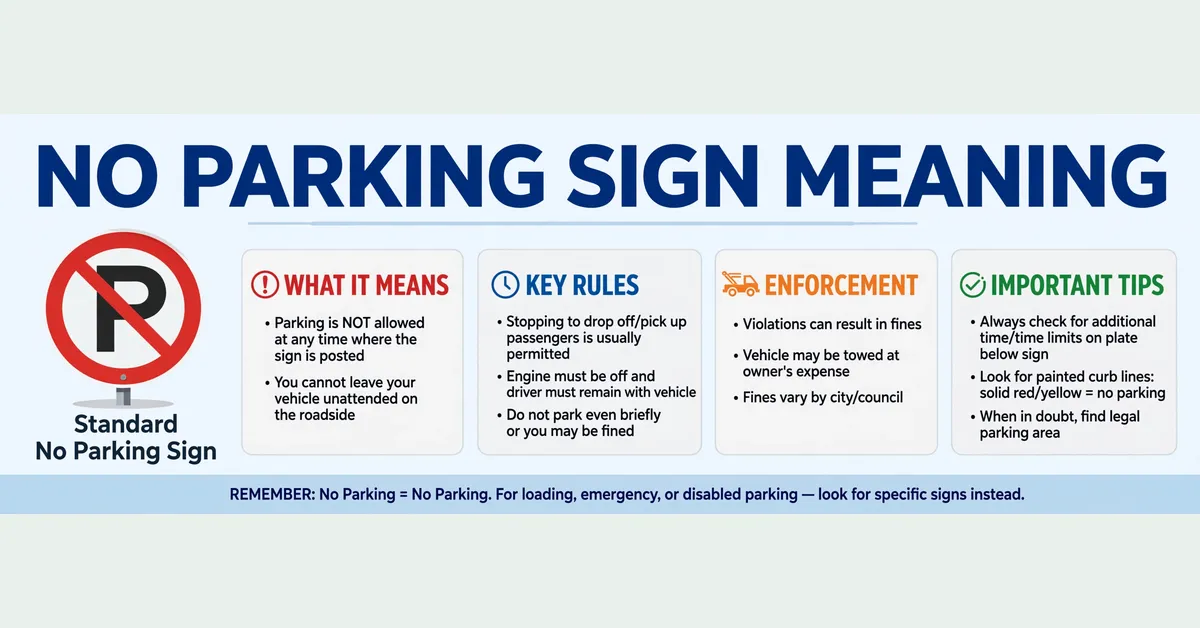
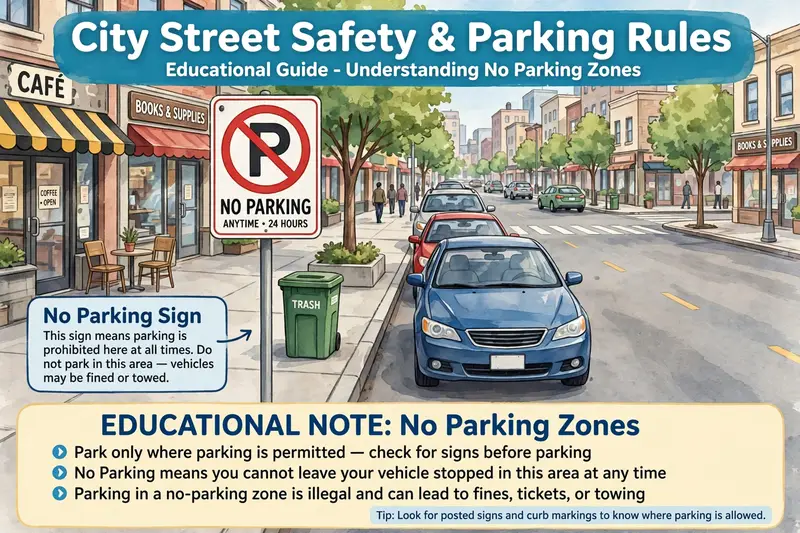
A no parking sign at a certain location means parking is prohibited in the area identified by the sign. For the common U.S. DMV practice question, the expected answer is that a driver may stop temporarily to load or unload passengers, where applicable rules allow it. Understanding this distinction helps new drivers prepare for their permit test and helps property owners choose signs that communicate parking restrictions clearly.
For businesses, apartment communities, homeowners’ associations (HOAs), and property managers, the right parking sign can help keep entrances clear and direct visitors away from restricted spaces. The important details are the message, location, visibility, material, and applicable regulations, not simply putting up a sign that says “No Parking.”
What Does a No Parking Sign Mean?
A no parking sign tells drivers that they may not park in the designated area. In a typical driving-test question, the expected distinction is that a brief stop to pick up or drop off passengers may be permitted, while leaving a vehicle parked is prohibited. The exact rule depends on the wording of the sign and applicable traffic laws.
For example, a driver might briefly stop to let a passenger out where that action is permitted, then continue driving. That is different from leaving the vehicle at the curb while going into a store. Additional restrictions, such as a no-stopping sign, a bus stop designation, or a loading-zone rule, can change what is allowed. Always read the entire sign before stopping.
No Parking vs. No Standing vs. No Stopping
These three terms describe different levels or types of restriction. The Federal Highway Administration’s Manual on Uniform Traffic Control Devices (MUTCD) includes separate signs for no parking, no standing, and no stopping. The exact legal definitions and exceptions can vary by state and local jurisdiction. See the current MUTCD, 11th Edition with Revision 1.
| Sign wording | General meaning | What to remember |
|---|---|---|
| No Parking | Parking is prohibited in the designated area. | A permitted temporary stop may still be possible. |
| No Standing | Restricts standing as defined by the applicable jurisdiction. | Do not assume passenger pickup is allowed. |
| No Stopping | Generally prohibits stopping for ordinary purposes, subject to legal exceptions. | Do not treat it as equivalent to no parking. |
The California Driver’s Handbook, for example, distinguishes curb-zone restrictions and prohibits parking where a no-parking sign is posted. Other states may define and enforce standing, stopping, and parking differently. Check the relevant state handbook when interpreting a specific roadside sign. Read California DMV parking guidance.
How to Read No Parking Signs, Arrows, and Time Restrictions
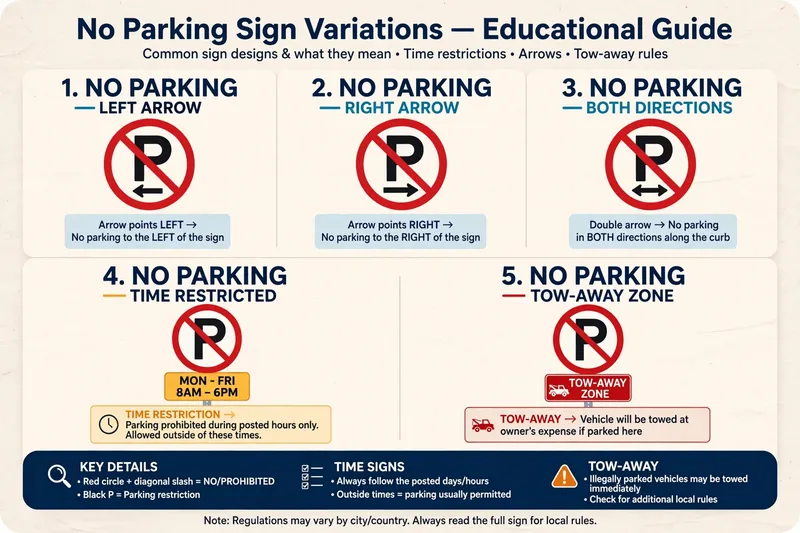
Read the complete message before deciding whether to stop or park. A sign may prohibit parking at all times, restrict parking to certain hours, or use arrows to indicate the regulated direction along a curb. Supplemental plates may specify exceptions, permit requirements, or tow-away conditions.
Consider a shopping center with a restricted curb near its delivery entrance. A sign with hours and a directional arrow can help identify the intended restriction, but its wording and placement must be appropriate for the property and local rules. For public roadways, the responsible road authority determines the applicable traffic-control requirements.
What Makes a No Parking Sign Suitable for a Business?
A useful no-parking sign communicates its message quickly, remains readable from the intended viewing distance, and suits its installation environment. Businesses should consider the wording, sign dimensions, contrast, mounting location, expected weather exposure, and whether arrows or time restrictions are necessary.
A sign intended for a private parking lot may differ from a regulatory traffic sign used on a public roadway. The MUTCD provides standards for traffic-control devices on public roads and other roadways open to public travel. Public-road installations must follow the requirements adopted by the relevant authority; a commercially available sign should not automatically be described as compliant for every application.
Choosing Materials, Sizes, and Reflectivity for No Parking Signs
The appropriate sign material depends on where and how the sign will be used. Aluminum is a common option for outdoor parking signs because it is lightweight and can provide durable service. Plastic and other substrates may suit certain indoor, temporary, or sheltered applications, depending on their specifications.
Reflective sheeting can improve visibility when headlights illuminate a sign at night. The required material, dimensions, lettering, and retroreflectivity depend on the application and applicable standards. For a private lot, select products based on the actual conditions; for a regulated roadway, confirm the specifications with the responsible authority rather than relying on a generic product description.
| Selection factor | What to consider |
|---|---|
| Material | Outdoor exposure, durability, mounting method, and expected service life |
| Size | Viewing distance, available space, and applicable requirements |
| Reflectivity | Whether nighttime visibility is needed and what the application requires |
| Message | No parking, restricted hours, directional arrows, or authorized exceptions |
| Mounting | Wall, fence, post, or another suitable approved support |
| Compliance | Private-property rules or the standards adopted by the relevant road authority |
Where Property Owners May Need No Parking Signs
No-parking signs can help communicate restrictions in apartment complexes, office buildings, retail centers, warehouses, private driveways, and other managed properties. They are especially useful where unauthorized vehicles could block access, interfere with deliveries, or occupy spaces reserved for specific purposes.
For example, a property manager may need to identify a service entrance, keep a driveway clear, or direct visitors toward designated parking. Before installing signs, confirm who controls the property, what restrictions are legally enforceable, and whether local rules require particular wording or placement. Where towing is contemplated, verify the applicable notice and authorization requirements.
Custom No Parking Signs for Businesses and Private Property
A custom no-parking sign can include a property-specific message, restricted hours, directional arrows, or other relevant information. This helps property managers communicate exactly where parking is prohibited instead of relying on a generic message that may leave visitors confused.
Before selecting or ordering a sign, identify the intended location, required message, dimensions, mounting method, and any applicable rules. If the sign is intended for a public roadway or a regulated traffic-control application, confirm the design requirements with the responsible authority first.
How to Maintain Clear and Effective Parking Signage
Even a well-designed sign can fail to communicate its message if it is obscured, damaged, poorly positioned, or inconsistent with nearby signs. Property managers should periodically check that signs remain readable, securely mounted, and visible to drivers approaching the restricted area.
Review signage after changes to traffic flow, entrances, parking layouts, or property rules. Replace faded or damaged signs when their message becomes difficult to read, and confirm that the displayed restrictions still match current policies. On public roadways, coordinate changes with the relevant authority rather than independently altering regulated traffic-control signs.
Frequently Asked Questions
What is the correct answer to “a no parking sign at a certain location means”?
The expected answer in the common DMV practice question is that you may stop temporarily to load or unload passengers where applicable rules permit it. The sign prohibits parking in the designated area.
Can you remain inside your car under a no parking sign?
Remaining inside the vehicle does not automatically make parking legal. The sign, the purpose of the stop, and the applicable state or local rules determine what is permitted.
What is the difference between a no parking sign and a no stopping sign?
A no-parking sign generally prohibits parking, while a no-stopping sign is more restrictive and generally prohibits ordinary stops. Applicable laws and specific sign instructions determine the exceptions.
What does an arrow on a no parking sign mean?
An arrow helps indicate the direction or extent of the regulated area. Read the entire sign and nearby signs to determine the applicable restriction.
What material is best for an outdoor no parking sign?
Aluminum is a common outdoor choice because it is lightweight and durable. The best material depends on exposure, installation, expected lifespan, and any applicable specifications.
Can a business install a no parking sign on its property?
A property owner or manager may be able to install signs to communicate parking restrictions, but enforceability and installation requirements depend on property rights and local laws. Public-roadway signs may require authorization from the responsible authority.
How do I choose a custom no parking sign?
Start with the location, intended message, required dimensions, viewing distance, mounting method, and environmental conditions. Confirm any legal or regulatory requirements before ordering.

Jack Harrison is a contributor at Square Root Signs, sharing creative ideas, useful information, and engaging content to help readers discover something valuable with every visit.