Dead End Sign Meaning: What It Is and What to Do
A dead end sign means the road ahead has no outlet, it ends in a cul-de-sac or stops entirely, forcing drivers to turn around. After years of studying traffic signs for driver education, I’ve watched this simple warning sign confuse even experienced motorists. Below, you’ll learn exactly what it means and how to handle it.
Maybe you’ve followed your GPS down a quiet street only to face this sign and wonder what went wrong. I know that sinking feeling, but a dead end sign isn’t bad news, just information. Understanding MUTCD codes like W14-1, the difference from no outlet signs, and the right response turns confusion into confidence behind the wheel.
What Does the Dead End Sign Mean?
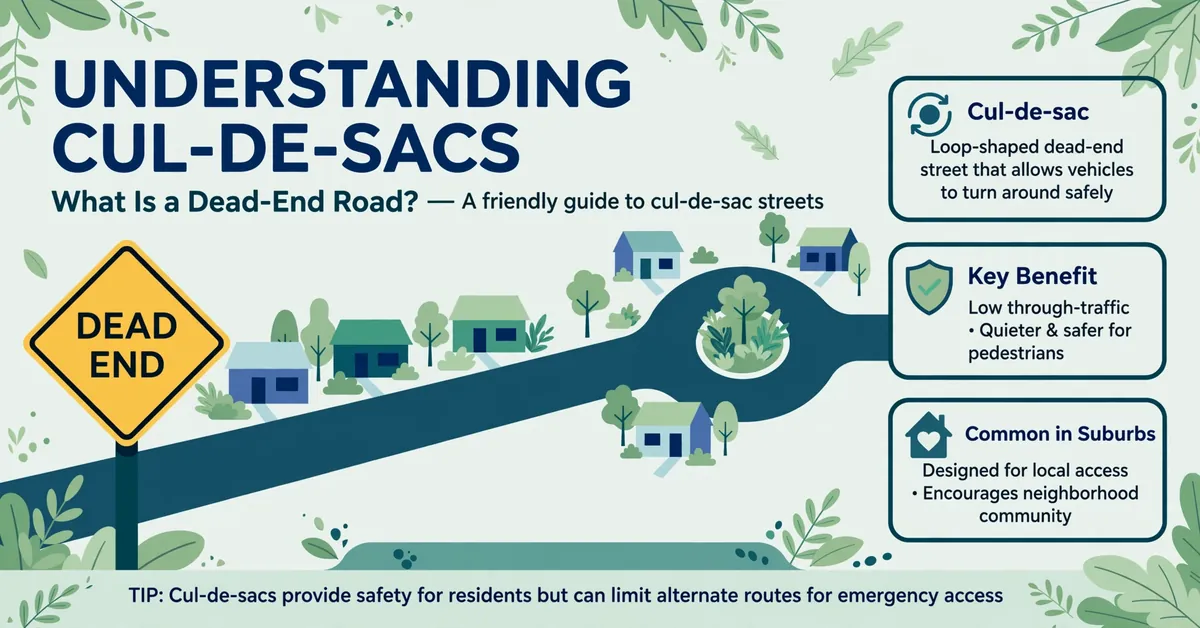
A dead end sign is a warning sign telling drivers the street ahead terminates with no through route. You’ll typically find it at the entrance of a residential street, where the pavement ends in a cul-de-sac or simply stops. The message is straightforward: don’t expect to exit the other side.
Unlike regulatory signs that issue commands, this marker simply informs you so you can plan ahead. Truck drivers especially appreciate the warning, since turning a large vehicle around on a narrow dead-end street is stressful. For everyday motorists, it means choosing another route or preparing to reverse direction calmly.
The term itself has a curious backstory: “dead end” is the English rendering of the French “cul-de-sac,” literally “bottom of the sack”, a street shaped like a bag with only one opening. The French phrase survives in real estate listings, while road engineers preferred the blunter English version for the sign itself.
Dead End Sign Characteristics: Shape, Color, and Design
The standard dead end sign is a yellow diamond, the warning sign shape, with black lettering spelling DEAD END. Some jurisdictions use a rectangular white sign with black text instead. Either way, the high-contrast design ensures drivers recognize the message instantly, even at speed or in poor visibility.
Placement matters as much as design. Transportation agencies install the sign at the entrance of the affected street, giving drivers time to decide before committing. You won’t see it mid-block, by then it’s too late. This advance positioning is what separates a helpful warning from a frustrating surprise.
The Purpose of a Dead End Sign
The sign exists to prevent wasted time and dangerous maneuvers. Without it, drivers might travel deep into a neighborhood before discovering there’s no way through. That leads to awkward three-point turns, blocked driveways, and frustrated residents. It keeps traffic flowing smoothly on streets built for through traffic.
Safety is the deeper goal. Dead-end streets often have children playing, parked cars lining both sides, and no shoulder for evasive moves. Warning unfamiliar drivers before they enter reduces speeds and prevents the panicked reversing that causes fender-benders. It’s a small sign doing quiet, important work for neighborhood safety.

Dead End Sign vs No Outlet Sign: Are They the Same?
Drivers constantly confuse these two, and the mix-up is understandable. Both warn there’s no through route ahead. But the MUTCD draws a distinction: a dead end sign marks one single street that terminates, while a no outlet sign covers a branching road network with no exit to another major street.
Picture a suburban neighborhood where side streets feed one entrance, that’s no outlet territory. Now picture a lane ending at a cul-de-sac, that’s a dead end. Knowing which sign you’re reading helps you judge how far in you might travel, which matters for delivery drivers and visitors alike.
| Feature | Dead End Sign | No Outlet Sign |
|---|---|---|
| MUTCD code | W14-1 | W14-2 |
| Applies to | Single street | Road network |
| Typical setting | Cul-de-sac | Suburban neighborhood |
| Arrow version | W14-1a | W14-2a |
Dead End Sign MUTCD Codes: W14-1 and W14-2 Explained
The Manual on Uniform Traffic Control Devices assigns every sign a code, and dead end markers are no exception. W14-1 designates the standard dead end sign, while W14-2 covers the no outlet variant. These codes help engineers, contractors, and driving instructors reference the sign without ambiguity across all fifty states.
You don’t need to memorize these numbers for your permit test, but recognizing them shows deeper knowledge. When a driving manual mentions W14-1, you’ll know it’s talking about this warning. This kind of familiarity impresses examiners and, more importantly, makes you a more observant driver in unfamiliar areas.
| Code | Sign | Meaning |
|---|---|---|
| W14-1 | Dead End | Single street with no outlet |
| W14-2 | No Outlet | Road network with no exit |
| W14-1a | Dead End with arrow | Cross street ends left or right |
| W14-2a | No Outlet with arrow | Cross street network has no exit |
Dead End Sign With an Arrow: What W14-1a Indicates
Sometimes you’ll spot a dead end sign with a horizontal arrow, the W14-1a variant. It warns that the cross street ahead ends in the arrow’s direction. Approaching an intersection with the arrow pointing right? The street to your right is the one that goes nowhere.
This version is especially useful in urban grids where you can’t see down every cross street. Rather than discovering the dead end after turning, you get advance notice to continue straight or choose differently. It’s a thoughtful piece of traffic engineering that saves drivers from pointless detours and tight turnarounds.
Can a Dead End Sign Be Combined With a Street Name Sign?
Yes, and it’s more common than you’d think. Local agencies can mount a dead end sign below a street name sign, the arrow showing which direction leads nowhere. This combination answers two questions at once: which street is this, and should I bother turning down it?
The practice follows local law rather than federal mandate, so some regions use it more than others. Suburban developments love this setup because winding layouts confuse visitors. If your town uses these combo signs, consider it a small kindness, someone thought about your experience before you arrived.
What to Do When You See a Dead End Sign
First, don’t panic, the sign is helping you. If the dead end wasn’t your destination, slow down and look for a safe place to turn around. Cul-de-sacs are designed for this with wide circular ends. On a narrow street, continue to the end where you’ll find room to maneuver.
If you meant to go there, visiting a friend or making a delivery, proceed cautiously. Watch for children, pets, and parked cars, keeping speed low. Dead-end streets feel quiet and safe, which is exactly why drivers let their guard down. Stay alert until parked or heading out.
Road Signs Similar to the Dead End Sign
It has several cousins worth knowing. The no outlet sign (W14-2) is the closest relative, covering broader road networks. You’ll also encounter ‘No Exit’ signs on highways, ‘Not a Through Street’ in older neighborhoods, and the cul-de-sac sign, a blue square showing the circular turnaround symbol.
Learning these together builds pattern recognition for the permit test and real driving. When you understand the whole family of termination warnings, no single sign can surprise you. That’s the difference between memorizing shapes and truly reading the road, what separates good drivers from great ones.
Dead End Sign Meaning on the DMV Permit Test
Expect the dead end sign to appear on your permit test as a picture-identification question: “What does this sign mean?” with four choices. The classic trap pairs it with the no outlet sign as a wrong answer, remember, dead end means one terminating street (W14-1), no outlet means a branching network (W14-2).
Test makers also love the placement question: the sign sits at the entrance of the dead-end street, not at its end. And don’t confuse it with the regulatory “Do Not Enter” sign, the dead end marker is a yellow diamond warning, not a red-and-white command. Two minutes with the comparison table above locks in all three distinctions.
Dead End Sign Meaning: Frequently Asked Questions
What does a dead end sign mean?
A dead end sign means the road ahead terminates with no through route, it ends in a cul-de-sac or stops completely. Drivers seeing this warning sign should prepare to turn around or choose another route, since continuing forward leads nowhere.
Is a dead end sign the same as a no outlet sign?
Not exactly. A dead end sign (W14-1) marks a single street that terminates, while a no outlet sign (W14-2) warns about a road network with multiple branches but no exit. Both mean you’ll need to turn around, but they describe different road layouts.
What should you do when you see a dead end sign?
Slow down and decide whether the dead end is your destination. If not, find a safe spot to turn around, cul-de-sacs are designed for this. If you meant to go there, proceed cautiously, watching for children, parked cars, and pedestrians on the quiet street.
What is the MUTCD code for a dead end sign?
The standard dead end sign carries MUTCD code W14-1, while the no outlet version is W14-2. Arrow variants pointing left or right are coded W14-1a and W14-2a. These federal codes ensure every transportation agency uses consistent American road signs nationwide.
Can a dead end sign have an arrow on it?
Yes. The W14-1a variant pairs the dead end message with a horizontal arrow indicating which cross street terminates. If the arrow points right at an intersection, the street to your right is the dead end, a helpful advance warning before you commit to turning.
Where are dead end signs usually placed?
Transportation agencies install dead end signs at the entrance of the terminating street, giving drivers advance notice before they commit. You’ll commonly see them in residential neighborhoods, suburban developments, and rural areas where roads end without connecting to another through route.
Is the dead end sign a regulatory or warning sign?
It’s a warning sign. The MUTCD classifies it in the W series (W14-1), the yellow-diamond family that alerts drivers to conditions ahead. Regulatory signs, the R series, issue commands like stop or yield, usually in red, white, or black. The dead end sign informs rather than orders, which is why it wears yellow.
What should you do if your GPS routes you into a dead end?
Trust the sign over the screen. GPS maps sometimes miss new cul-de-sacs or confuse private drives with through streets. When the dead end sign appears, slow down, find a safe turnaround, and let your navigation recalculate, it will reroute within seconds. Never reverse blindly back onto the main road just because the GPS insists.
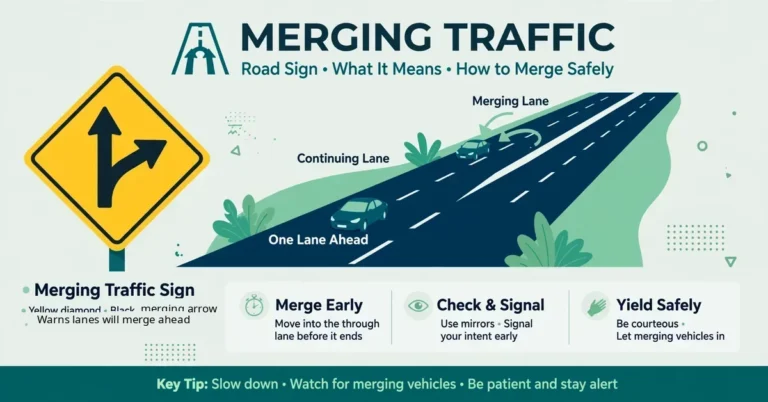
Now that you understand the dead end sign meaning, keep exploring: see how a green arrow traffic signal works, what to do at a merging traffic sign, when you must yield at a yield sign, and check the official MUTCD standards for warning signs.

Jack Harrison is a contributor at Square Root Signs, sharing creative ideas, useful information, and engaging content to help readers discover something valuable with every visit.