Deaf Child Area Sign: Meaning, Rules & How to Get One (2026)
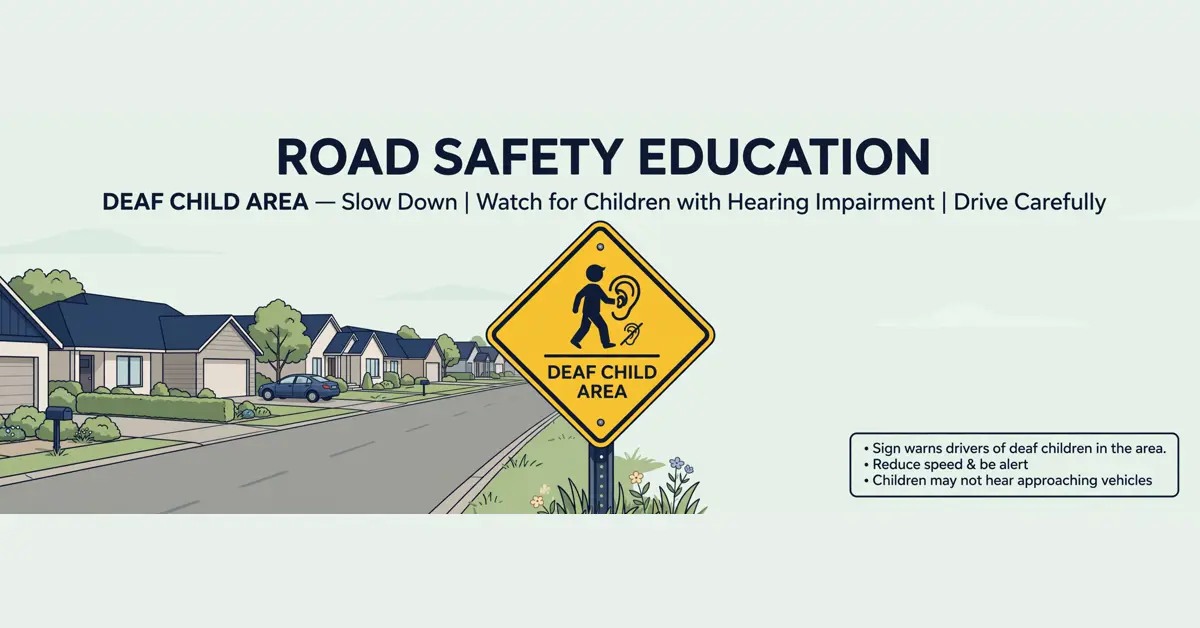
A deaf child area sign warns drivers that a child with hearing loss may be present nearby and may not hear approaching vehicles or audible warnings. It encourages motorists to pay attention to sidewalks, driveways, residential streets, and other places where children may enter the roadway unexpectedly.
For parents, caregivers, and communities, choosing a deaf child warning sign involves more than selecting a design. Local installation policies, parental consent, sign visibility, reflective aluminum, and mounting requirements all matter. This guide explains the sign’s purpose, what the available research says about its effectiveness, how to request one from your city, and what to check when buying a sign for an approved location.
Why Deaf Children Face Greater Road Hazards Near a Deaf Child Area Sign
Road safety often depends on noticing more than what is directly ahead. Drivers may hear a horn or bicycle bell, while a child with hearing loss may not receive the same auditory warning. A deaf child area sign alerts motorists to this potential difference and encourages them to look carefully for children near homes and driveways.
Imagine a child stepping out from behind a parked car to retrieve a ball. A driver might have little time to react, especially on a narrow residential street. The warning sign can prompt greater visual awareness, but drivers must still watch for pedestrians and respond to actual road conditions.
How Drivers Should Respond to a Deaf Child Area Sign
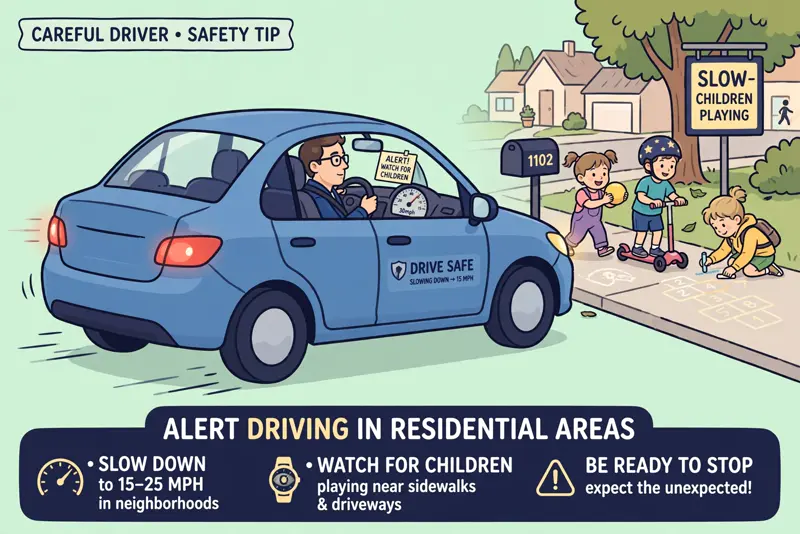
When drivers see a deaf child warning sign, they should remain alert, scan sidewalks and driveways, and be prepared to stop if a child enters the roadway. They must follow posted speed limits and traffic laws while adjusting their speed to visibility, pedestrian activity, and other conditions.
A horn should never be treated as a reliable way to alert a child who may not hear it. Drivers should avoid distractions, check carefully when reversing, and look for children before turning across a sidewalk. These precautions are useful in every residential neighborhood, whether or not a warning sign is installed.
The Sign Is Advisory, Not Regulatory: Deaf Child Area Sign Rules
A deaf child area sign warns about a potential hazard; it does not automatically create a lower speed limit or give drivers permission to ignore other traffic rules. Its legal status and permitted placement depend on the applicable jurisdiction and the road authority responsible for the location.
For example, the New York State Supplement to the MUTCD identifies the Deaf Child Area sign as NYW7-6 in its Section 2C.113 guidance. That New York-specific reference should not be interpreted as proof that the same sign is prescribed nationally or accepted under identical rules in every state.
Before installing a sign on a public road, contact the relevant city, county, or state transportation authority. A product being available for purchase does not establish that its placement is authorized on a particular street.
How Families Get a Deaf Child Area Sign Installed
Start by contacting your local public works department, traffic engineering office, or other authority responsible for the road. Ask whether it accepts requests for deaf child area signs, what eligibility requirements apply, and whether the proposed location can be considered for installation.
Some local procedures require a written request, parent or guardian consent, or supporting documentation. For example, a published municipal request form hosted by NNVA.gov asks for information about the child and a certification of hearing impairment, and describes circumstances in which the sign may be removed. Its age-related rule is specific to that procedure, not a nationwide requirement.
Before submitting an application, ask the agency what information it needs and whether the sign must be supplied and installed by authorized personnel. Do not install a sign on a public road without the required permission. If the request is declined, ask whether other traffic-calming or pedestrian-safety measures are available.
Do Deaf Child Area Signs Actually Slow Drivers Down?
A 2017 master’s thesis by Luke Alan Miller at the University of Northern Iowa investigated the effects of child-safety warning signs on vehicle speeds. It included Deaf Child Area signs, playground signs, and school-zone signage. The study reported that Deaf Child Area signs did not reduce vehicle speeds or increase compliance with posted speed limits at the locations examined.
That finding is important, but it should be interpreted within the limits of the research. It does not prove that every sign in every location has the same effect, nor does it establish that warning signs have no awareness value. It does show why communities should not rely on a sign alone when considering child-pedestrian safety.
For a family or municipality, the practical takeaway is to combine appropriate warning measures with supervision, pedestrian education, clear visibility, and road-safety measures selected by the responsible authority. Avoid claims that purchasing a particular sign will prevent collisions or guarantee slower driving.
Practical Safety Measures Beyond the Deaf Child Area Sign
A warning sign is one part of a broader safety plan. Families can practice safe crossing, looking in both directions, recognizing moving vehicles, and identifying visual signals such as brake lights. Children should learn to stop at the edge of the road and wait for a safe opportunity to cross.
At home, consider whether parked vehicles, shrubs, fences, or other obstacles limit visibility near driveways. Age-appropriate supervision and a play area separated from moving traffic can also help. Reflective clothing may improve visibility in low light, but it cannot replace safe behavior, suitable road design, or attentive driving.
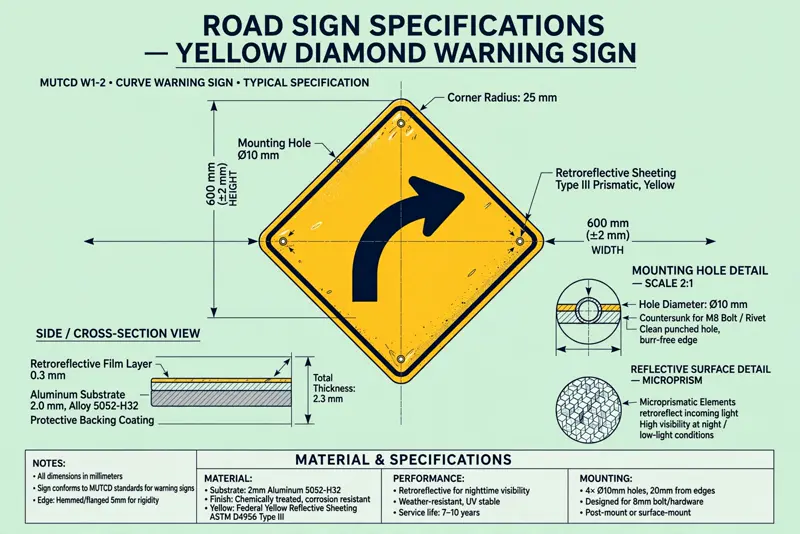
Deaf Child Area Sign Specifications and Product Features
If you are shopping for a deaf child area sign for sale, compare its dimensions, material, reflective sheeting, and mounting arrangement. Commercial listings commonly offer diamond-shaped signs with black lettering on a yellow background, made from aluminum. Exact configurations vary by manufacturer and product.
The following table summarizes examples found in commercial listings. These are available product configurations, not universal legal requirements or a recommendation for every road.
| Specification | Examples available commercially | What to check |
| Sign size | 18″, 24″, 30″, 36″; some sellers offer 48″ | Whether the size is appropriate and authorized for the intended location |
| Shape and colors | Diamond-shaped panel; yellow background with black legend | Required design and wording under local rules |
| Substrate | .080-inch aluminum in several listings | Material durability and the manufacturer’s specification |
| Reflective sheeting | Engineer Grade, High Intensity Prismatic, Diamond Grade | Visibility needs, applicable specifications, and product documentation |
| Mounting holes | Two 3/8-inch holes on some models; arrangements vary | Compatibility with the approved post and mounting hardware |
| Customization | Certain suppliers offer custom sign services | Whether custom wording or design is permitted by the authority |
Sources for the example specifications include SafetySign.com, Dornbos Sign & Safety, and Hall Signs.
How to choose reflective aluminum
Reflective sheeting can improve the visibility of a sign when headlights illuminate it at night. Different grades have different performance characteristics, and the best choice depends on the application and applicable requirements. Do not assume that the most expensive grade is automatically necessary for every location.
Check the actual product specification, reflective sheeting grade, aluminum thickness, warranty terms, and mounting compatibility before ordering. If the sign is intended for a public roadway, obtain the road authority’s requirements first. A commercially advertised material or warranty is not, by itself, proof of regulatory approval.
Deaf child area sign for sale: What buyers should compare
When comparing a deaf child area sign for sale, look beyond the headline price. Confirm the size, reflective material, mounting-hole pattern, shipping cost, lead time, and whether hardware is included. For multiple signs, ask the seller for a written quote that itemizes each configuration.
If you need custom wording, confirm that the design is appropriate for its intended location before paying for fabrication. A custom sign may be suitable for private property or a facility, but public-road use requires separate consideration of local approval and traffic-control requirements.
Deaf Child Area Sign Compliance: Section 2C.113
Section 2C.113 appears in the New York State Supplement to the MUTCD, where the Deaf Child Area sign is designated NYW7-6 and the Blind Child Area sign is designated NYW7-7. The supplement describes circumstances in which these signs may be used to warn motorists about a child who may not hear normal traffic sounds or perceive approaching traffic.
The same guidance addresses parent or guardian consent and says the responsible highway authority should keep informed about the child’s residence, activity areas, and age so that signs can be removed when they are no longer needed. This is a jurisdiction-specific example, not a universal US policy.
For other states and cities, check the current state supplement, transportation department guidance, and local application procedures. Requirements may differ, including the documentation requested, eligibility criteria, installation responsibility, and removal process. Confirm the rules directly with the agency that controls the road rather than relying solely on a seller’s description.
The bottom line: A deaf child area sign alerts drivers to a possible child-pedestrian hazard, but it cannot guarantee that drivers will slow down or notice a child. Families should seek local approval before installation, and buyers should verify sign specifications against the requirements for the intended location.
11. Frequently asked questions
What does a deaf child area sign mean?
A deaf child area sign warns motorists that a child with hearing loss may be nearby and may not hear approaching vehicles or audible warnings. Drivers should remain alert, watch for children, and adjust their driving to the road conditions.
Is a deaf child area sign an official traffic sign in the USA?
The New York State Supplement to the MUTCD specifically identifies the Deaf Child Area sign as NYW7-6. Other states and local authorities may have different policies. Confirm the applicable requirements with the agency responsible for the road.
How do I request a deaf child sign from my city?
Contact your local public works department or traffic engineering office. Ask whether it accepts requests for these signs, whether written guardian consent or documentation is required, and who is authorized to install and maintain the sign.
What size deaf child area sign should I buy?
Commercial products commonly come in 18-, 24-, 30-, and 36-inch sizes, with some suppliers offering other dimensions. The appropriate size depends on the application and applicable requirements. For public roads, confirm the required specifications before ordering.
What is the difference between a deaf child area sign and a blind child area sign?
A deaf child area sign alerts drivers to a child who may not hear traffic sounds or audible warnings. A blind child area sign addresses the potential presence of a child who may not perceive approaching traffic visually. Both are intended to encourage driver awareness, but they address different potential hazards.
Do deaf child warning signs reduce vehicle speeds?
A 2017 University of Northern Iowa thesis reported no reduction in vehicle speeds or improvement in speed-limit compliance at the Deaf Child Area sign locations studied. The findings do not establish the effect of every sign in every setting.
What reflective material should I choose?
Available options include Engineer Grade, High Intensity Prismatic, and Diamond Grade reflective sheeting. Compare the manufacturer’s specifications and select material appropriate for the intended application. Public-road installations should meet the requirements established by the responsible authority.
Can I buy a custom deaf child warning sign?
Some sign suppliers offer custom sign services. Before ordering custom wording or a modified design, check whether it is suitable for your intended location. A sign that is acceptable on private property may not be approved for a public roadway.
When should a deaf child area sign be removed?
Removal policies vary by jurisdiction. Some authorities may review whether the child still lives or spends time in the area and whether the sign remains necessary. Contact the responsible agency to understand its review and removal procedure.

Jack Harrison is a contributor at Square Root Signs, sharing creative ideas, useful information, and engaging content to help readers discover something valuable with every visit.