No U Turn Sign: Meaning, Rules and DMV Tips
A no u turn sign tells you that turning around to drive in the opposite direction is not allowed at that spot. If you make the turn anyway, you can be cited for a moving violation, and you can also create a dangerous conflict with traffic coming from the other direction. The sign is easy to miss if you are only watching the traffic light, so it pays to know exactly what it looks like and what to do when you see it.
This guide explains what the no u turn sign means, what it looks like, where it is posted, what to do when you see one, and how it differs from a no left turn sign. You will also find the penalty rules, common mistakes, and the DMV test points that show up again and again on permit exams.
What Does a No U-Turn Sign Mean?
A no u turn sign means you may not make a U-turn at the location it controls. A U-turn is the maneuver where you turn your vehicle around in a half circle so that you end up traveling in the opposite direction on the same road. When this sign is posted, that maneuver is prohibited, even if the road looks clear and the light is green.
The sign is a regulatory sign, which means it states a traffic law rather than giving advice. Regulatory signs must be obeyed in the same way as any other traffic law. Ignoring one is a moving violation, and an officer can stop you and issue a citation even if no crash or near miss happens.
It is important to understand that the sign bans only the U-turn itself. It does not ban every turn at that intersection. In most cases you can still turn left, turn right, or go straight, unless another sign bans those movements too. The only movement the red circle and slash covers is the U-turn shown by the arrow on the sign.
The rule exists because a U-turn is one of the slowest and most exposed maneuvers a driver can make. While you turn, your vehicle crosses lanes of traffic, moves slowly, and spends time facing across the road instead of along it. At a busy intersection, that creates a real risk of a side impact or a rear end collision with a driver who did not expect you to turn around. The sign removes that risk by keeping traffic flowing in its normal directions.
Some drivers think a U-turn is allowed whenever there is no sign banning it. That is not quite right. Even where no sign is posted, a U-turn is illegal if it cannot be made safely, if it interferes with other traffic, or if a state or local law bans it in that place. The sign simply makes the ban clear and specific at locations where drivers might otherwise try the turn.
What Does a No U-Turn Sign Look Like?
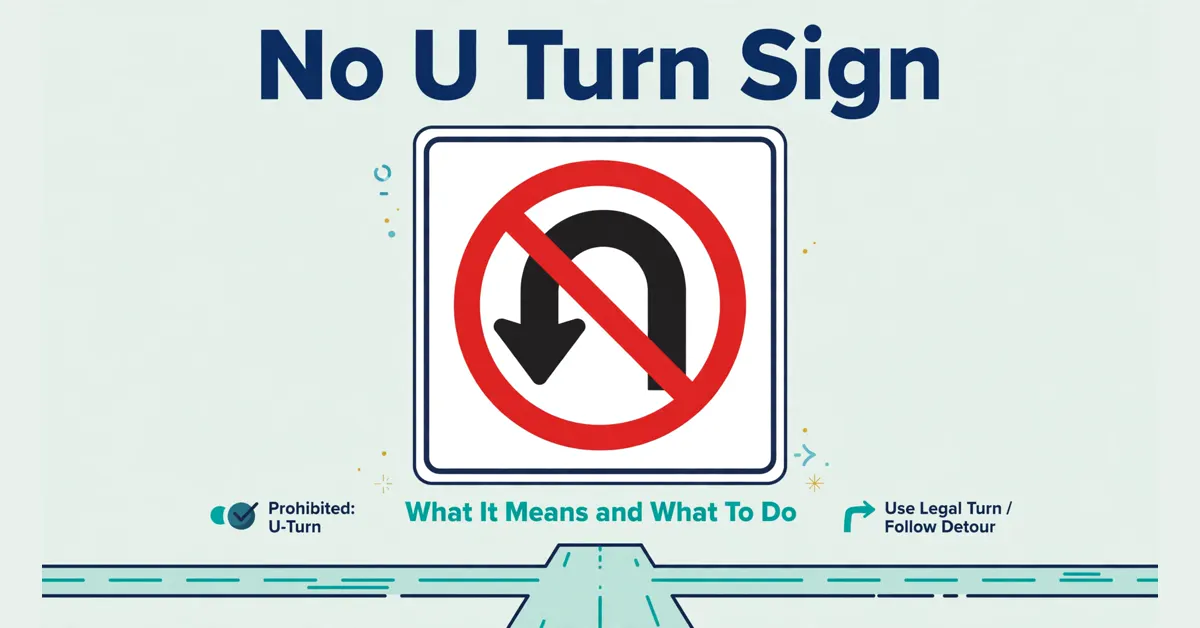
The standard United States no u turn sign is identified as R3-4 in the Manual on Uniform Traffic Control Devices, known as the MUTCD. It is covered in Section 2B.26, which deals with movement prohibition signs. The Federal Highway Administration describes it as a square white sign with a black border, showing a black U-shaped arrow that points downward with the arrowhead on the left side of the U. A red circle and a diagonal slash running from the upper left to the lower right are superimposed over the arrow.
The design follows the same visual language as the other signs in the R3 series. A red circle with a slash always means that the movement pictured inside is prohibited. The picture inside tells you which movement is banned. On the R3-4 sign the picture is a U-shaped arrow, so the message is that turning around is banned. On the R3-2 sign the picture is a bent left arrow, so the message is that a left turn is banned.
Here is the sign at a glance:
| Detail | What it is |
|---|---|
| MUTCD code | R3-4 |
| MUTCD section | Section 2B.26, Movement Prohibition Signs |
| Shape | Square |
| Background | White with a black border |
| Symbol | Black U-shaped arrow, arrowhead on the left, pointing down |
| Prohibition mark | Red circle with a diagonal slash from upper left to lower right |
| Sign type | Regulatory, it states a law you must obey |
| Meaning | Do not make a U-turn at this location |
Because the sign uses a symbol rather than words, you can read it at a glance, even at speed. That is the point. By the time you are close enough to read a worded sign, you may already be committed to the turn. The red circle and slash is the part your eyes should catch first, and it is the same red circle and slash used on no left turn, no right turn, and do not enter signs.
Some older or local versions of the sign use the words NO U TURN instead of the arrow symbol, but the symbol version is the MUTCD standard and is the one you will see on most public roads. A few places also use a combined sign, R3-18, which bans both U-turns and left turns on a single sign. That sign shows a U-shaped arrow and a left turn arrow under one red circle and slash, and it is used where both movements are prohibited.
Where Do You See a No U-Turn Sign?
No u turn signs are posted where turning around would be unsafe, would block traffic, or would conflict with the way the intersection is designed. The MUTCD says that movement prohibition signs should be installed where specific movements are prohibited at an intersection approach, and that a no u turn sign should be placed where a no left turn sign would go, such as overhead, on a median, or at the far left corner.
You will most often see one at a busy intersection, especially where traffic moves fast or where several lanes meet. A U-turn there would force you to cross multiple lanes of oncoming traffic, and that is exactly the situation the sign is meant to prevent. You will also see them at median openings on divided highways, where a U-turn would put you across fast moving traffic with little room to speed up again.
Other common locations include the approaches to bridges and tunnels, where there is no room to turn around safely, and near schools, hospitals, and fire stations, where turning traffic would interfere with emergency vehicles or with children crossing. They also appear at intersections controlled by a traffic signal where the signal timing does not allow a U-turn, and on one way streets, where turning around would send you the wrong way down the road.
A no u turn sign can also appear on a stretch of road between intersections, not just at a junction. If a business district has a center median with a break for deliveries, for example, a sign may ban U-turns at that break while still allowing left turns into a driveway. Always read the sign in its exact spot, because the ban applies to that location, not to the whole road.
If you are learning to drive, make a habit of scanning for regulatory signs before you reach an intersection, not after you have entered it. A no u turn sign is often posted on the far side of the intersection or on the median, so it can be easy to overlook if you are only looking at the signal. A quick scan of the signs on your approach gives you time to choose a different route instead of discovering the ban when you are already in the turn lane.
What to Do When You See a No U-Turn Sign
When you see a no u turn sign, the correct action is simple: do not make the turn. Continue through the intersection or past the location, then find a legal place to turn around. That may mean going around the block, turning at the next intersection where U-turns are allowed, or pulling into a parking lot and turning around there, where it is safe and legal to do so.
Follow these steps when you realize you need to turn around and a no u turn sign is posted:
Step 1: Keep going. Do not stop in the turn lane or in the middle of the intersection to reconsider. Stopping there blocks traffic and creates a hazard of its own. Drive through the intersection normally.
Step 2: Find the next legal place to turn. Look for an intersection without a no u turn sign, a side street, or a parking lot where you can turn around safely. Going around the block is usually the safest option in a busy area.
Step 3: Check for other restrictions at the new spot. Just because U-turns are allowed there does not mean the turn is safe. Check for oncoming traffic, pedestrians, and cyclists, and make sure you have a clear view in both directions before you turn.
Step 4: Signal and turn only when it is clear. Use your left turn signal, wait for a safe gap, and complete the turn in one smooth movement. Do not start the turn and then stop halfway across the road.
The table below sums up what to do and what to avoid:
| Do | Do not |
|---|---|
| Continue past the sign and turn around later | Make the U-turn anyway because the road looks clear |
| Go around the block to reverse direction | Stop in the intersection to change your mind |
| Use a parking lot or side street where it is legal | Reverse down the road to get back to the turn |
| Signal early and check both directions | Turn across several lanes of fast traffic |
| Watch for pedestrians and cyclists during the turn | Assume a green light makes the U-turn legal |
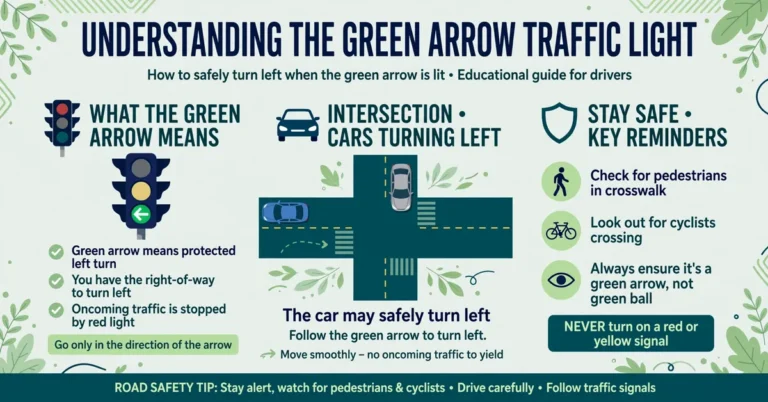
A green light or a green arrow does not override a no u turn sign. The California MUTCD states the general rule clearly: motorists can make a U-turn on a green signal or a green arrow except where such a turn is prohibited by signs. The sign is the exception, and it wins. If the sign is there, the green light only permits the movements the sign allows.
The same logic applies at a red light. Some drivers think that turning on red is a separate question from the sign, but the ban on the U-turn still applies. A no u turn sign prohibits the maneuver at all times, not only when the light is green.

No U-Turn Sign vs No Left Turn Sign
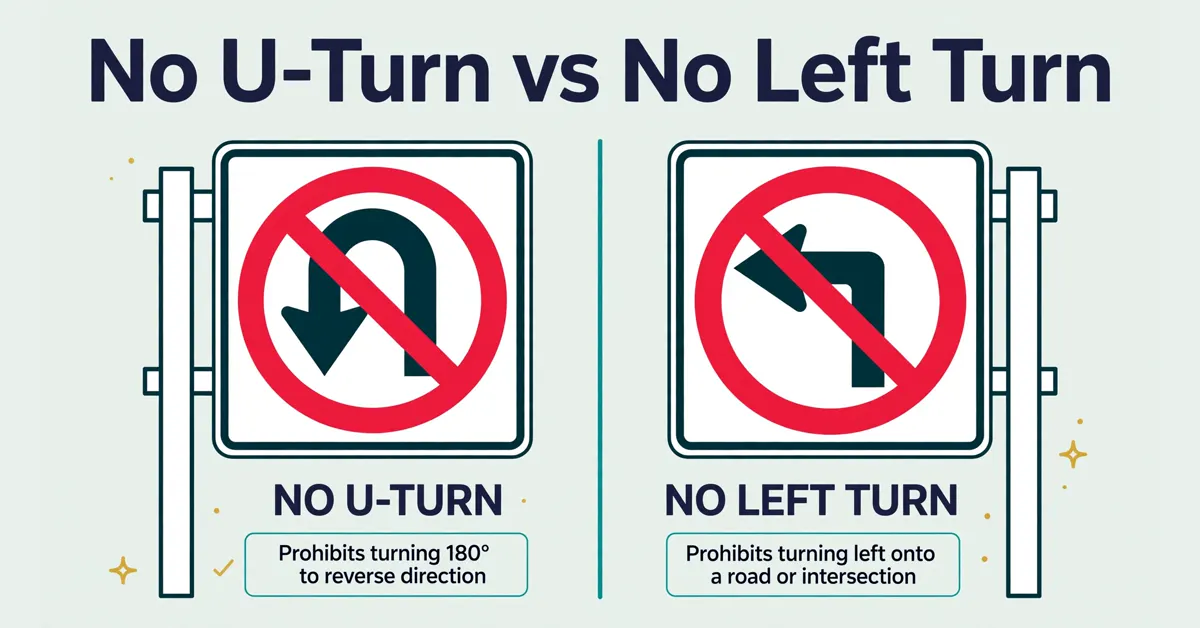
The no u turn sign and the no left turn sign look alike, and learners often mix them up, so it is worth learning the difference properly. Both are square white regulatory signs with a red circle and slash, and both belong to the R3 series in the MUTCD. The only difference is the arrow inside the circle, and that arrow changes the meaning completely.
A no left turn sign, MUTCD code R3-2, shows a bent arrow pointing to the left. It bans a left turn at that location. A no u turn sign, MUTCD code R3-4, shows a U-shaped arrow. It bans turning around to travel in the opposite direction. A left turn and a U-turn are different movements, and the signs ban them separately.
That separation matters in real driving. At an intersection with a no u turn sign only, you may still turn left, because the sign bans only the U-turn. At an intersection with a no left turn sign only, you may not turn left, but you may still be able to make a U-turn from the left turn lane if no sign bans it and the turn can be made safely. Always read the arrow, not just the red circle, before you decide what is allowed.
Here is the comparison in one place:
| Feature | No U-Turn Sign | No Left Turn Sign |
|---|---|---|
| MUTCD code | R3-4 | R3-2 |
| Arrow on the sign | U-shaped arrow, pointing down | Bent arrow pointing left |
| Movement banned | Turning around to go the opposite way | Turning left |
| Can you turn left? | Yes, unless another sign bans it | No |
| Can you make a U-turn? | No | Yes, if it is safe and not banned by another sign or law |
| Shape and colors | Square, white, black arrow, red circle and slash | Square, white, black arrow, red circle and slash |
| Sign type | Regulatory | Regulatory |
Where both movements are banned, engineers use the combined R3-18 sign instead of posting two separate signs. The MUTCD says that if both left turns and U-turns are prohibited, the combination No U or Left Turn sign should be used instead of separate R3-2 and R3-4 signs. If you see a sign with two arrows under one red circle and slash, both movements are banned.
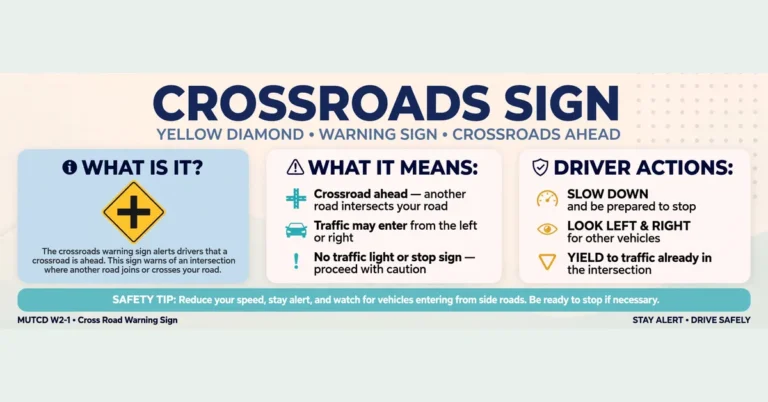
For a fuller look at the other signs you meet at intersections, our guide to the yield sign explains how right of way works when you are giving way rather than turning, and the crossroads sign covers the warning sign that tells you an intersection is ahead.
Penalties for Making an Illegal U-Turn
Making a U-turn where a no u turn sign is posted is a moving violation, and the consequences go beyond a single ticket. The exact penalty depends on where you are, because traffic laws are set at the state and local level. There is no single nationwide fine for an illegal U-turn, so any specific dollar figure you see online applies only to the place it was written about.
FindLaw, which tracks U-turn laws state by state, explains that penalties for an illegal U-turn vary by jurisdiction. Most often a citation brings a fine, and the amount depends on local law and on whether it is a first offense or a repeat violation. FindLaw gives a typical range of about $50 to $300 for the fine, and notes that the citation can also add points to your license in states that use a point system. You can read the state by state breakdown in the FindLaw guide to illegal U-turn state laws.
Points are often the part of the penalty that costs the most in the long run. In many states a U-turn citation carries around three points, though the exact number varies by state. Accumulating too many points can lead to a license suspension, and the violation is visible to your insurer, which can raise your premiums. A single illegal U-turn is unlikely to suspend a clean license on its own, but it adds to whatever points are already on your record.
The consequences get worse if the illegal turn causes a crash. If you turn where the sign bans it and hit another vehicle, a pedestrian, or a cyclist, you can face a larger fine, a reckless driving charge, and civil liability for the damage. The sign is strong evidence that the turn was not permitted, which makes it hard to argue that the maneuver was reasonable.
If you do receive a citation, read the code section printed on the ticket. It tells you exactly which rule the officer says you broke, and it is the starting point for checking the fine and the points in your state. Your state driver handbook and the court listed on the citation are the reliable sources for the exact amount, not a number quoted from another state.
Common Mistakes Drivers Make
Most illegal U-turns are not deliberate. They happen because a driver misreads the sign, misjudges the road, or tries to fix a wrong turn in a hurry. Knowing the common mistakes makes them easier to avoid.
Reading only the red circle. A driver sees the red circle and slash, assumes it bans left turns, and then makes a U-turn anyway, or the reverse. Always read the arrow inside the circle. The arrow is the message.
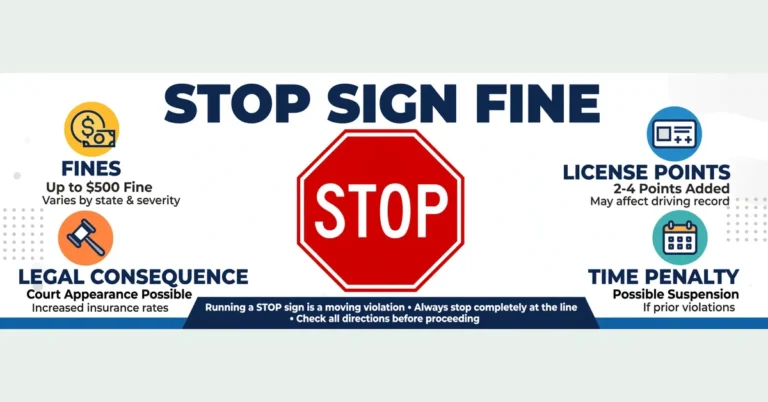
Assuming a green arrow allows the turn. A green arrow tells you that your movement has the right of way. It does not cancel a posted prohibition. If the no u turn sign is there, the green arrow permits a left turn, not a U-turn.
Turning around to correct a missed turn. Missing your turn is frustrating, and the temptation to spin around at the next light is strong. That is exactly when the sign is most likely to be posted, because engineers know drivers will try it there. Going around the block costs a minute. A ticket and a crash cost far more.
Starting the turn before checking the far side. A U-turn needs a wide, clear space. Drivers sometimes begin the turn and then discover a median, a parked car, or oncoming traffic in the way, and end up stuck across the lanes. Check the whole path of the turn before you start it.
Forgetting pedestrians and cyclists. A driver focused on gaps in car traffic can miss a pedestrian in the crosswalk or a cyclist coming up on the right. A U-turn crosses the crosswalk twice, once going out and once coming back, so the risk is doubled.
Copying the car ahead. If the driver in front of you makes an illegal U-turn and gets away with it, that does not make it legal for you. Each driver is responsible for their own movement, and an officer can cite the second car just as easily as the first.
DMV and Permit Test Tips
The no u turn sign is a regular on DMV knowledge tests and permit exams, and the questions usually test whether you can read the sign and apply the rule, not just recognize its shape. Here are the points that come up most often.
Learn the code. The no u turn sign is MUTCD R3-4. Test questions sometimes ask for the code, and sometimes describe the sign and ask what it means. Remember the pair: R3-2 is no left turn, R3-4 is no U-turn, and R3-18 is the combined no U-turn or left turn sign.
Read the arrow, not the color. The red circle and slash appears on several signs. The test will often show two similar signs side by side and ask which one bans a U-turn. The answer is always the one with the U-shaped arrow. If the arrow bends left, it is a no left turn sign.
Know that the ban applies even on green. A common test question describes a green light at an intersection with a no u turn sign and asks whether the turn is allowed. It is not. The sign overrides the signal for that movement.
Know where U-turns are banned even without a sign. Your state handbook lists places where U-turns are always illegal, such as on a hill or curve where you cannot be seen from a safe distance, in front of a fire station, or where the turn would interfere with traffic. Test questions often pair a sign question with one of these general rules.
Know the difference between a regulatory sign and a warning sign. The no u turn sign is regulatory, which means it states a law. Warning signs, such as the merging traffic sign, are usually diamond shaped and yellow, and they warn about a condition ahead rather than banning a movement. Tests often ask you to sort signs by type, so knowing the shape and color code helps.
Practice with your state handbook. Sign designs are the same across the United States because they follow the MUTCD, but the exact wording of the rules and the penalties differ by state. Study the signs chapter of your own state driver handbook, and take the practice questions there, so the R3-4 sign is familiar before test day.
No U-Turn Signs in Other Countries
The United States is not the only country that bans U-turns with a sign, and the basic idea is the same almost everywhere: a red circle and slash over a U-turn arrow. The details change from country to country, so a sign you recognize at home may look slightly different abroad.
In the United Kingdom, the no U-turn sign is a white circular sign with a red border, showing a black U-shaped arrow, and it carries the same meaning: do not turn around at that point. The round shape is the difference. British regulatory signs that prohibit a movement are round, while the American R3-4 is square.
In many European countries the design is similar to the British one, a red bordered circle with a U-turn arrow, sometimes with the words No U-turn in the local language underneath. In Canada the sign follows the same style as the United States, a square sign with a red circle and slash over a U-shaped arrow.
If you are driving abroad, learn the local sign shapes before you travel, and do not assume that a sign means the same thing just because it looks familiar. The safe rule everywhere is the same: if a red circle and slash covers a U-turn arrow, do not make the turn, and find another place to reverse direction.
A Simple No U-Turn Scenario
Imagine you are driving to a shop and you pass it on your left. The next intersection has a no u turn sign on the median. The light is green and the road looks clear, so the temptation is to turn around right there and drive back to the shop.
The sign says no. You drive through the intersection, turn right at the next side street, turn right again, and come back to the main road facing the other way. The detour takes about a minute, and you reach the shop legally and without crossing any lanes of fast traffic.
Now imagine the other choice. You turn around under the sign, and a driver coming the other way does not expect a car to swing across the lanes in front of them. They brake hard, the car behind them brakes too, and a simple missed turn becomes a crash, a ticket, and an insurance claim. The sign was there because that exact situation had happened before.
That is the whole lesson of the sign in one picture: the legal route costs a minute, and the illegal route risks far more than a minute.
Conclusion
A no u turn sign, MUTCD R3-4, is a square white regulatory sign with a black U-shaped arrow under a red circle and slash, and it means you may not turn around to travel in the opposite direction at that location. It is posted where a U-turn would be unsafe or would block traffic, such as busy intersections, median openings, and approaches to bridges and tunnels. When you see one, keep going and turn around at the next legal spot, such as going around the block or using a side street or parking lot. The sign bans only the U-turn, so a left turn is still allowed unless another sign bans it, and a green light does not override the sign. Making the turn anyway is a moving violation, with a fine that varies by jurisdiction and points on your license in states that use a point system. Learn to read the arrow inside the red circle, and the sign will never catch you out, on the road or on the DMV test.
Frequently Asked Questions
What does a no u turn sign mean?
A no u turn sign means you may not make a U-turn at the location it controls. You may not turn your vehicle around to travel in the opposite direction on the same road, even if the road looks clear and the light is green. The sign bans only the U-turn, so you can usually still turn left, turn right, or go straight unless another sign bans those movements.
What is the MUTCD code for the no u turn sign?
The code is R3-4. It is listed in Section 2B.26 of the Manual on Uniform Traffic Control Devices, which covers movement prohibition signs. The Federal Highway Administration describes it as a square white sign with a black border, a black U-shaped arrow, and a red circle with a diagonal slash over the arrow.
Can you make a U-turn if there is no sign?
Sometimes, but not always. Where no sign bans it, a U-turn is usually allowed only if it can be made safely and without interfering with other traffic. State and local laws also ban U-turns in some places even without a sign, such as on a hill or curve with limited visibility, in front of a fire station, or where the turn would block traffic. Check your state driver handbook for the exact rules.
What is the difference between a no u turn sign and a no left turn sign?
The difference is the arrow inside the red circle. The no u turn sign, R3-4, shows a U-shaped arrow and bans turning around. The no left turn sign, R3-2, shows a bent arrow pointing left and bans a left turn. A no u turn sign still allows a left turn, and a no left turn sign still allows a U-turn if it is safe and not banned by another sign or law.
Can you turn left at a no u turn sign?
Yes. A no u turn sign bans only the U-turn, not a left turn. You may turn left at that intersection as long as no other sign, signal, or law bans the left turn. If both movements are banned, you will see the combined R3-18 sign, which shows both arrows under one red circle and slash.
What happens if you make an illegal U-turn?
Making a U-turn where a no u turn sign is posted is a moving violation. An officer can stop you and issue a citation even if no crash happens. The citation usually brings a fine and can add points to your license in states that use a point system. If the turn causes a crash, the consequences are worse, including a larger fine, a possible reckless driving charge, and liability for the damage.
How much is the fine for an illegal U-turn?
There is no single nationwide fine, because traffic fines are set by state and local law. FindLaw gives a typical range of about $50 to $300, and notes that the amount depends on the jurisdiction and on whether it is a first offense or a repeat violation. The exact fine is printed on the citation or published by the court that issued it, so check that source for your area.
Do you get points on your license for an illegal U-turn?
In many states, yes. An illegal U-turn is a moving violation, and states with a point system usually add points for it, often around three points, though the exact number varies by state. Accumulating too many points can lead to a license suspension, and the violation can also raise your insurance premiums. Check your state point schedule for the exact number.
Is a U-turn allowed on a green light?
Yes, in general, but not where a no u turn sign is posted. The general rule is that a U-turn is allowed on a green signal or a green arrow, except where it is prohibited by signs. The sign is the exception, and it overrides the green light for that movement. If the sign is there, you must not make the turn even on green.
Where are no u turn signs usually placed?
They are usually placed at busy intersections, at median openings on divided highways, near bridges and tunnels, and near schools, hospitals, and fire stations, where a U-turn would be unsafe or would block traffic. The MUTCD says a no u turn sign should be placed where a no left turn sign would go, such as overhead, on a median, or at the far left corner of the intersection.

Jack Harrison is a contributor at Square Root Signs, sharing creative ideas, useful information, and engaging content to help readers discover something valuable with every visit.